
Located near historic U.S. Route 66 just east of Flagstaff, Walnut Canyon National Monument offers a powerful glimpse into the lives of Indigenous peoples who made their homes within its steep limestone walls. For centuries, ancestral Sinagua communities lived here, building stone dwellings tucked beneath natural overhangs and carefully adapting to a landscape shaped by water, elevation and seasonal change.
ABOUT WALNUT CANYON NATIONAL MONUMENT
Walking the trails today, visitors descend into a narrow canyon where cliff dwellings remain remarkably intact. The setting feels both intimate and expansive, framed by ponderosa pine forests above and riparian vegetation below. These ancestral homes speak to deep knowledge of place, from sheltering structures from harsh weather to living close to vital water sources. Interpretive signage along the trail explains Sinagua lifeways, trade networks, agriculture, and architectural techniques.
Walnut Canyon is not only an archaeological site but a living reminder of Native presence in northern Arizona. Its quiet paths encourage reflection on how people have long lived in balance with this high desert environment, offering Route 66 travelers a meaningful pause that connects scenic beauty with Indigenous history rooted in the land.
VISITOR INFORMATION
The setting itself is dramatic, with sheer canyon walls, pinyon-juniper woodlands, and sweeping high-desert views characteristic of northern Arizona. Wildlife sightings may include mule deer, lizards, and a variety of bird species. Because of the elevation, weather conditions can vary significantly by season, and visitors should be prepared for sun exposure, cold temperatures, or icy trail conditions depending on the time of year.
Educational programming may include ranger-led walks and talks, particularly during peak seasons. The site provides a quiet, reflective environment where visitors can experience ancestral Indigenous architecture within its original landscape context.
HIKING TRAILS 
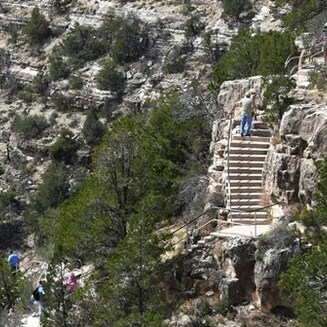
Island Trail: A ~0.9-mile descent into the canyon with about 240 steps, offering access to 25 cliff dwellings — strenuous and best visited earlier in the day.
It has been more than 700 years since Walnut Canyon echoed with the voices and sounds of a robust pueblo community. Today, the Island Trail leads you back in time, and welcomes you into the world of the Native people archeologists call Sinagua. You'll experience 25 cliff dwelling rooms along the trail; and gaze at others visible across the canyon.
Rim Trail: Easier, level trail with overlooks, ancient pueblo sites, and cultural exhibits.
Stroll along the canyon rim through a mixed juniper and pinion pine forest. Two canyon overlooks provide scenic views of the canyon and cliff dwellings below. Explore a partially rebuilt pithouse and pueblo set back from the canyon rim. On a summers day, visit the demonstration garden that features traditional crops grown by the Sinagua.
HOURS OF OPERATION
Daily: 9:00 am – 5:00 pm (Mountain Standard Time) year-round
Visitor Center and trails close early:
Island Trail ends at ~4:00 pm
Rim Trail ends at ~4:30 pm
(The park itself closes at 5:00 pm — plan to finish trails before then.)
Holiday Closures:
Closed: Christmas Day (December 25) and New Year’s Day (January 1)
Early closure (1:00 pm): Thanksgiving Day
Admission & Fees
Entrance Fees:
Private Vehicle (7-day): ~$25
Pedestrian / Bicycle (7-day): ~$15
Motorcycle (7-day): ~$20
Commercial Bus: ~$100 per day
(Fees valid for 7 consecutive days.)
Free Admission For: Children 15 and under